[Study leader Alison Steube of the Harvard Medical School] said: "Pregnancy is associated with a number of things that you normally wouldn't want to happen to your body, including storing more fat and having higher than normal levels of fatty acids circulating in the blood.
"By breastfeeding, mothers can convert those energy reserves into nutrition for their infants. Breastfeeding isn't just good for babies, it's good for mothers, too."
Wednesday, February 14, 2007
Breastfeeding Benefits
According to recent studies, being breastfeed may increase one's social mobility and protect mothers from heart attacks:


Wednesday, February 07, 2007
Breastfeeding Enhances Children's Vison
According to a study in the January 2007 issue of American Journal of Clinical Nutrition, children between the ages of 4 and 6 who were breastfed as infants performed better on one test of visual acuity than did those who were formula-fed:
(link)During the first six months after birth, the formula-fed children were randomly assigned formula either with DHA or without DHA added.
The researchers found that breast fed children were significantly more likely to have better stereo-acuity than formula-fed children. Among the formula-fed children, addition of DHA into the formula did not make any difference in stereo-acuity measurements.
Although DHA has been proposed to be the benefiting agent in breast milk, the fact that fortification of formula with DHA did not make any difference in stereo-acuity suggests that the added DHA may not work or there is something else in milk that enhances the vision.
Saturday, January 20, 2007
Doulas in the news
About once a week, some hometown newpaper interviews local doulas and does a (usually) nice story about them. This one out of Ft. Wayne, Indiana had this interesting tidbit:
Wow, $1800 is the going rate for a midwife in many places.
While Indiana does not require doulas to be certified, the Starks say it is something they will look for in any doula they might hire for a subsequent birth. Fort Wayne area doulas charge $350-$500, depending on the extent of their role. In New York, the going rate is about $1,800, said Saalfrank, whose sister is also a doula and childbirth educator.
Monday, January 15, 2007
The Next Breast Thing
Wet-nursing seems to be making a comeback.
As the article mentions, the World Health Organization "recommends a baby should be breastfed by its mother in the first instance, or drink her expressed milk. If that is not possible, the next preference is for human milk from a donor and formula should be a last resort."
As the article mentions, the World Health Organization "recommends a baby should be breastfed by its mother in the first instance, or drink her expressed milk. If that is not possible, the next preference is for human milk from a donor and formula should be a last resort."
Andrew at One Year
It has been quite a while since I've written an Andrew update. The little pea-pie punkin' guy turned one this week. And to celebrate the occasion, he is walking! Over the last couple weeks, he had been taking a few tentative steps. Just between pieces of furniture and such. But the day before his birthday, he was walking with a "walker" toy and it got hung up on a rug. So he just continued on without it, half-way across the living room. He still crawls most of the time, but he loves practicing his new skill.
Other amazing things that Andrew is doing ...
Yesterday I was emptying the dish washer and putting the silverware away. Andrew grabbed a spoon and, instead of sticking it in his mouth like he usually does, he stuck it in the silverware drawer. Later I was sitting in a chair next to the dryer (a trick I discovered while I was pregnant) folding laundry and stacking it on the open dryer door. Andrew cruised over to the nearby shelf where we keep clean kitchen towels, grabbed one, and placed it on the dryer door. He did this about three times.
Andrew is using about three signs - the signs for "more" (which he does by pointing his index finger to his palm, just like his brothers did) and "all done" (well, mostly just waving his hands around) and pat-pat when he wants milk. He doesn't say much, although he clearly says "Da Da". He can clap his hands and wave "bye bye". He will follow me around from room to room (as the mother of three, I don't stay put for long) and is quite social. When I put on my sling, he gets very excited. This is not new; he's done this for several months. But he's not clingy at all and rarely asks to be held when we are at home. He is a busy boy and has things to do. He doesn't like strangers, though.
He weighs just over 21lbs. which is a bit below the old adage of "triple their birth weight by one year" but on track compared with his brothers' growth curves.
I am actually writing his birth story this week. And I promise photos coming soon.
Other amazing things that Andrew is doing ...
Yesterday I was emptying the dish washer and putting the silverware away. Andrew grabbed a spoon and, instead of sticking it in his mouth like he usually does, he stuck it in the silverware drawer. Later I was sitting in a chair next to the dryer (a trick I discovered while I was pregnant) folding laundry and stacking it on the open dryer door. Andrew cruised over to the nearby shelf where we keep clean kitchen towels, grabbed one, and placed it on the dryer door. He did this about three times.
Andrew is using about three signs - the signs for "more" (which he does by pointing his index finger to his palm, just like his brothers did) and "all done" (well, mostly just waving his hands around) and pat-pat when he wants milk. He doesn't say much, although he clearly says "Da Da". He can clap his hands and wave "bye bye". He will follow me around from room to room (as the mother of three, I don't stay put for long) and is quite social. When I put on my sling, he gets very excited. This is not new; he's done this for several months. But he's not clingy at all and rarely asks to be held when we are at home. He is a busy boy and has things to do. He doesn't like strangers, though.
He weighs just over 21lbs. which is a bit below the old adage of "triple their birth weight by one year" but on track compared with his brothers' growth curves.
I am actually writing his birth story this week. And I promise photos coming soon.
Triple Surprise
Dusty and Lynette Johnson of Tuttle, North Dakota, were planning a homebirth, but they got a little more than they were expecting:
The girl babies were fine, but the boy had some trouble breathing and spent a couple weeks in the hospital. Friends and neighbors threw a fundraiser to help defray medical and living expenses.
The Johnsons thought they would be bringing a third child into the family, and so did everyone else. When she had Christopher, he weighed more than nine pounds at birth; Abigail was 10 pounds when she was born. Lynette Johnson expected to have another large baby, and her midwife said her measurements were on target for that, she said.
When she gave birth, however, her midwife quickly prepared for a multiple birth after Marissa was born and she realized Lynette was not done giving birth.
Friday, January 12, 2007
Mag Sulfate for Preterm Labor
An editorial published in this month's OBG Management argues that obstetricians should stop using Magnesium Sulfate to treat preterm labor:
Link: Is the end of an era here for magnesium sulfate tocolysis?
Data from trials never clearly demonstrated that magnesium has a clinically significant tocolytic effect compared with “control” treatments. In a Cochrane review of magnesium tocolysis, neither improvement in the risk of delivery before 48 hours nor reduction in risk of birth before 34 or 37 weeks was observed, compared with control treatments. More recent data also suggest that magnesium may increase the risk of adverse neonatal outcomes, including death, especially at the upper end of the magnesium dose range.
In the absence of demonstrated clinical efficacy and a concern over potentially negative neonatal effects, obstetricians should consider strictly limiting their use of magnesium for tocolysis.
Thursday, December 14, 2006
Epidurals aren't for wimps
Epidurals aren't for wimps – labour can be different for every mother:
In everyday life, we respond in instinctive ways to pain. If you drop something on your foot, you automatically rub yourself because rubbing causes your body to make endorphins which are natural pain-killing substances. If you have a bad stomach ache, you would probably lie down and curl up in a ball with a heatpad because warmth and being in a particular position are very comforting. It would seem that pain tells us how to help ourselves recover from injury. In labour, there is no injury taking place, but the pain teaches the woman how to give birth. She is led by it to try a variety of positions to increase her comfort and by moving around and using different positions, she is also helping her baby's head to press down firmly all around the cervix so that it opens up evenly. Later in labour, her changes of position cause the baby to be shifted one way and then the other, helping him to find the easiest way down through the pelvis.
Tuesday, December 12, 2006
Epidurals May Negatively Affect Breast-Feeding
Researchers found that 93 percent of the women in the study breast-fed their baby in the first week after birth. However, women who had an epidural were significantly more likely to have difficulty breast-feeding during the first few days after delivery and to breast-feed less often than other women.
At 24 weeks, 72 percent of women who did not have an epidural were breast-feeding, compared with 53 percent who received pethidine or epidurals containing bupivacaine and fentanyl (an opioid).
Pat O'Brien, a spokesman for the Royal College of Obstetricians and Gynaecologists, said it was possible that fentanyl had an effect on the baby.
But he added: "There are other factors which may explain this link, including that if a woman chooses not to have an epidural, she may also be more motivated to persevere with breastfeeding.
"Also, a lot of those women who had epidurals also went on to have Caesarean sections which - unless you have a lot of support - make it difficult to breastfeed because it's harder for women to pick their babies up."
(link)
Sunday, December 10, 2006
Miscarriage Risks
A new study points to factors that increase (and some that do not increase) the risk of early miscarriage. In addition to the risks to very underweight women, the study says:
Which is small comfort to those who are severely hyperemetic.
Interestingly, and somewhat reassuringly:
HT: Perfect Work who has these comments.
Although the reasons behind miscarriage are still vague, the researchers did establish some other common risk factors. The study found that single women were at an increased risk of miscarriage, as were women who had had a previous abortion (60% higher risk) and those who had had IVF (40% higher risk). Those who took more than a year to conceive were twice as likely to miscarry as women who had conceived within the first three months.
The researchers also revealed factors in maintaining a healthy pregnancy. Two-thirds of the women they studied who took vitamin supplements during early pregnancy reduced their risk of miscarriage by around 50%. The effect was most pronounced among those taking folic acid or iron and multivitamins containing these. Eating fresh fruit, vegetables and chocolate daily was also found to halve the odds of a miscarriage.
The study also showed that
Women who suffered from nausea and sickness in the first 12 weeks of their pregnancy were almost 70% less likely to miscarry, especially those with severe sickness.
Interestingly, and somewhat reassuringly:
Supposed risk factors such as alcohol consumption, smoking and caffeine intake were unconfirmed in the study.
Tuesday, November 21, 2006
Safety of Homebirth
I'm going back through some old things...
Selkie and Expectant Waiting had some great pieces on the safety of homebirth.
Selkie and Expectant Waiting had some great pieces on the safety of homebirth.
Friday, November 17, 2006
ADA Advises No Fluoride For Babies
The American Dental Association has done a 180 and now warns that infants under one year of age should not be given fluoridated water, such as that mixed with concentrated or powdered baby formula, according to the Organic Consumers Association.
ADA page on Infants, Formula and Fluoride.
ADA page on Infants, Formula and Fluoride.
Saturday, November 11, 2006
A different take on tandem nursing
A Canadian woman is breastfeeding conjoined twins:
Simply amazing.
Although Simms breastfed her two older kids, it’s a whole new beginning with her twins.
"What’s the most challenging part of breast feeding them?" Simms said. "Positioning!"
"It’s very complicated because when one is on the breast the other has to be tilted and has to be slanted downwards.
"You’re feeding one and the other will suck on its tongue and you have to give it a soother or something because it wants food.
"We’re trying to figure out how to feed both of them at the same time," Simms said, bursting out laughing.
Blogger Beta
I've switched over to the beta version of Blogger. The good news: tags are enabled. Bad news: it will take some time before I get everything tagged and the blog reformatted. Sorry if it's a mess in the meantime.
Breastfeeding Carnival
Five blogs - Mama Knows Breast, The Lactivist, Motherwear, Breastfeeding123, and Breastfeeding Mums are starting
Look for their first edition on Tuesday.
a monthly blog carnival focused on the topic of breastfeeding. Each month we'll pick a particular topic, write up our own posts around that topic and help you find your way to each of the five postings. We'll be starting off by blogging about breastfeeding and the holidays, be it with family, traveling or maybe even great gifts for nursing moms.
Monday, November 06, 2006
Thursday, November 02, 2006
Thursday, October 26, 2006
Nausea Symptoms Undertreated
The New York Times reports "[a]lthough there are now safe and effective ways to prevent and to treat predictable cases [of nausea and vomiting], like those involving pregnant women and cancer patients, many people who could benefit fail to receive adequate treatment, if any treatment at all."(Nausea? There’s No Need to Suffer in Silence). Even worse,
Related link: Hyperemesis Education & Research Foundation
In a clinical guidance bulletin for obstetrician-gynecologists, the [American College of Obstetricians and Gynecologists] wrote that an investigator found that among women who called a help line for those with nausea and vomiting during pregnancy and who subsequently terminated pregnancy because of these afflictions, fewer than 50 percent were offered anti-emetic therapy.
“Of those offered treatment, 90 percent were offered regimens that were not likely to be effective,” the bulletin says.
Thursday, October 19, 2006
Milkscreen
An Austin company has developed Milkscreen, a kit which allows women to test their milk for the presence of alcohol.
What will they think of next?
What will they think of next?
Monday, October 09, 2006
Friday, October 06, 2006
Mini-blind Cord Safety
October is National Window Covering Safety Month. One child a month is killed from accidentally strangling in window cords.
If you still have the old looped miniblind cords, you can order a free repair kit from the Window Covering Safety Council.
Do it now! Let's keep our babies safe.
If you still have the old looped miniblind cords, you can order a free repair kit from the Window Covering Safety Council.
Do it now! Let's keep our babies safe.
Friday, September 29, 2006
Caring for Your Fuzzi Bunz
Doodlebuckets has the best cloth diaper information I have come across yet, including washing instructions (with photos), and article on how to stop "wicking", and "Help! My Diapers Are Stinky!"
Wednesday, September 27, 2006
Friday, September 22, 2006
Fuzzi Bunz Update
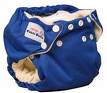
We like the Fuzzi Bunz. My major complaint is - get this - I have a hard time determining if they are wet. That's right. Sometimes I have to take off the diaper and pull out the insert before I know if they are wet or not. Or at least stick my hand all the way into the pocket. I also think that it will work to replace the insert and only change the whole diaper every other time. That will cut down on laundry and wear & tear on the diapers. I do find that I need to change the wee one a bit more often with the cloth diapers.
Cloth dipes do seem a bit warm, too. Maybe that is because they are made of synthetic fabric, and because of the bulk. Since we are heading into winter (we don't get fall here in Texas), not a problem but on warm afternoons a disposable would seem to be more comfortable.
It seems ironic, doesn't it, that the most popular cloth diapers rely heavily on synthetic fabrics? I mean, isn't that what cloth diapering is all about, being more natural? That thought struck me today.
I bought three new Fuzzi Bunz and then three used ones on eBay. Although I saved a bit of money on the used ones (particularly since the seller mispelled "fuzzi" as "fuzi"), I am now convinced it is worth it to spend the extra few dollars and get new. Something about used diapers is just... icky.
The eBay dipes came with Hemparoo inserts whereas my new ones came with the Microterry soaker. The popular consensus is that the microterry is much more absorbent, while the hemparoos are thinner and less bulky. Maybe one of each at night, if I go to full time CD'ing.
Blog Roundup
 I've come across a number of baby/birth/breastfeeding blogs today, some new discoveries and some great posts from old friends...
Injennuous (a mom/doula named Jenn) writes about Going Overdue and Prodromal Labor. Also check out her Views on Birth blog.
Millner's Dream makes the case for Doula certification.
Cooler*doula is a doula-in-training.
From The Lactivist (who's planning a waterbirth, or at least a water labor) , I found Mama Knows Breast, the blog of Andi Silverman, a non-practicing* lawyer , former journalist, and soon-to-be author.
While you're at it, check out The Lactivist's great BF advocacy products.
* In the Mommy Blawger's world, you can't be a "former lawyer". You can stop practicing, but you can't un-lawyer yourself. It's not what we do, it's what we are.
Tuesday, September 12, 2006
Orgasmic Birth

Via the Birth Ecology Journal, it's the Orgasmic Birth video:
Orgasmic Birth is a documentary that examines the sexual and intimate nature of birth and the powerful role it plays in women's lives when they are permitted to experience it. This documentary asks viewers to reexamine everything they thought they knew about giving birth and the potential it holds.
Saturday, September 02, 2006
Fuzzi Bunz
I'm taking a tentative step toward cloth diapering. I ordered three Fuzzi Bunz and they arrived in the mail today. We will see how we like them. They are expensive, but they have great resale value on eBay, so it's not much of a risk. I think I will like them, though. More importantly, will Andrew like them?
Chief Executive Mom got hers in the mail today, too, and posted photos.
Chief Executive Mom got hers in the mail today, too, and posted photos.
Monday, August 28, 2006
Pre-term birth drug
Here's one to watch:
U.S. Food and Drug Administration staff questioned the effectiveness of Adeza Biomedical Corp.'s Gestiva drug because new findings were at odds with an earlier government-funded trial, according to documents released on Monday.(link)
Data for the drug, which aims to prevent pre-term births, also showed a possible increase in miscarriages and stillbirths in women who used it, the agency staff said ahead of an FDA advisory panel scheduled to discuss the drug on Tuesday.
Sunday, August 27, 2006
Andrew at Six Months, Seven Months
At six months, Andrew:
- Sits well by himself.
- Tries to get all the way up on his hands & knees; rocks back and forth. Sometimes he gets on one knee and pushes himself up with the opposite leg.
- Plays peek-a-boo (at least he "gets" the joke now).
- Has started solids. Just a little rice cereal and a small jar a fruit, once a day. Plus some Cheerios or a teething biscuit.
- Cut his first tooth.
- Can drink water or milk out of a cup.
- Learned how to get into a sitting position from his hands and knees.
- Two days later, started crawling. Just a little.
- Will crawl a couple inches in the "proper" hands-and-knees position, then goes down and army crawl the rest of the way.
- Cut tooth #2 at 6 1/2 months, then #3 at 7 months.
- Likes to be tickled. Laughs at his brothers jumping on the bed.
- Has been known to eat a whole jar of baby food at one sitting. Usually just eats half a jar, though.
- Tried his first vegetables (sweet potatoes).
- Crawls for real.
- Will crawl from room to room, and seems delighted with himself for figuring out this little trick.
- Tries to pull up on everything. He can pull up on the fireplace hearth, but not on the coffee table yet.
- When he sees that mommy has left the safety gate down in the kitchen, he makes a beeline for the cat food bowl. When she tells him "no", he stops, sits up, looks at her, and smiles. And then continues on.
- Thinks his big brothers are really, really funny.
Subscribe to:
Posts (Atom)


 Posts
Posts


